Your Productivity Software Is Designed to Steal Your Attention
Your work apps are built to form habits, and the author of Hooked showed it with Slack. What you can do: set your team's norms and follow them first.


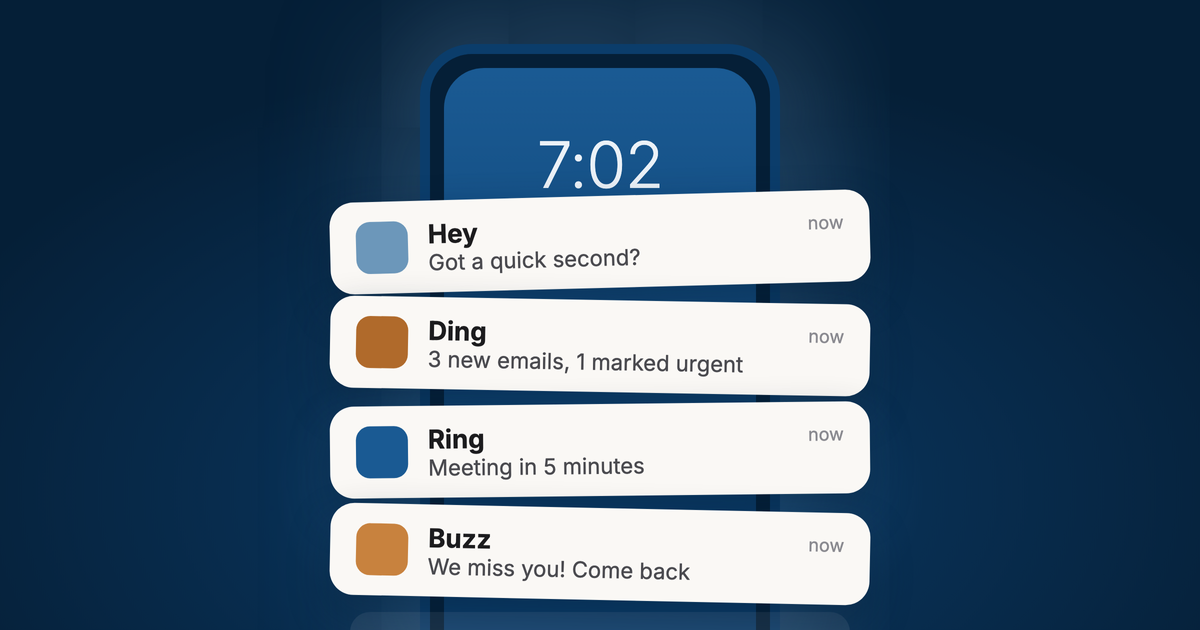
Ding... and you're back in the app
You open Slack to check one thing. Before long you're deep in other threads, you've reacted to messages you didn't need to see, and you've forgotten what you came for.
Your productivity software is designed to form a habit, and it's very good at it. The man who wrote the playbook for building habits used Slack as his example.
Where did the playbook come from?
In 2014, Nir Eyal published Hooked: How to Build Habit-Forming Products. It gave product teams a four-step loop: trigger, action, variable reward, investment. Take people through that loop enough times, and they start coming back on their own.
The book was written for product managers, designers, marketers and startup founders. Its publisher calls it an international bestseller with over 500,000 copies sold.
The same month the book came out, Eyal and journalist Ciara Byrne published an analysis of Slack that ran it through each step of the model. Their question was why Slack is so habit-forming.
How does the Hook Model show up in your tools?
Walk through the loop with Slack open on your phone.
Trigger. A badge or a buzz. Eyal's analysis points to device notifications as the cue that brings people back.
Action. You open the app. It takes one tap, on any device.
Variable reward. Eyal names two rewards at work in Slack. The first is the tribe: feeling included and approved of by your peers. The second is the hunt: new information, and the fear of missing out on it. You never know which ping matters, so you check them all.
Investment. Every colleague you invite, every message you add to the searchable archive and every tool you connect makes the app harder to leave.
Try the same walk-through with the other tools on your phone. Look for the trigger, the tap, the reward and what you've put in.
Is the software really the problem?
Here's where the story turns. Five years later, Eyal published Indistractable, a book about getting your focus back.
While researching it, he visited Slack's headquarters. He found that Slack's own employees weren't distracted by Slack.
His conclusion: distraction at work is a symptom of cultural dysfunction. As he told Inc., "Put tech in a corrosive work culture and tech will perpetuate the dysfunctional work environment."
So both things are true. The software is built to pull you in, and your culture decides how far it gets.
Why does this matter if you're the founder?
Because you set the culture. Eyal found three things in the companies that handle this well. People feel safe raising problems. They have a place to raise them. And management shows what being indistractable looks like.
That third one lands on you. Eyal has put it plainly: if managers are on their phones in every meeting, everyone learns that being constantly connected is what matters most.
I'd take his point past meetings. If you answer Slack late at night, your team learns that late at night is fair game. If you always reply within seconds, every message starts to feel urgent.
If you're a fractional executive, you walk into a different culture with every client. Each one has its own rules about what counts as urgent.
What should founders change first?
Eyal laid out a test for builders, the Manipulation Matrix. It asks two questions: would I use this product myself, and will it help people materially improve their lives?
Turn that test around and use it as a buyer:
- Would the people who built this tool use it the way it asks me to?
- Does it make my work better, or just more frequent?
- When I opened it, did I decide to, or did it decide for me?
Then set your team's norms out loud. Agree on when after-hours messages are fine, how fast a reply is expected and when do-not-disturb stays on. Then follow those norms yourself, first.
Hold Deliberate to the same three questions. It's a Mac app for Gmail and Outlook that also connects Slack, Asana, Granola meeting notes and Zoom, and it runs on your own Claude plan. It answers three questions: What was I doing? What do I need to do? What have I done?
Your software was designed to form a habit. If you run your own company, you get to decide whether it's a habit you want your whole team to have.
- Nir Eyal and Ciara Byrne, "The Psychology of a Billion-Dollar Enterprise App: Why is Slack so Habit-Forming?" Nir and Far, November 25, 2014 | Slack mapped to trigger, action, variable reward (tribe and hunt), investment. Checked Nov 24, 2026.
- Penguin Random House, Hooked book page Published November 4, 2014 by Portfolio; written for product managers, designers, marketers and startup founders. Checked Nov 24, 2026.
- Penguin UK, Hooked book page International bestseller, over 500,000 copies; trigger, action, variable reward, investment. Checked Nov 24, 2026.
- BenBella Books, Indistractable book page Published September 2019. Checked Nov 23, 2026.
- Big Think, Nir Eyal on distraction at work Visited Slack; distraction at work is a symptom of cultural dysfunction; three attributes of healthy cultures. Checked Nov 24, 2026.
- Inc., "Why Slack Employees Don't Get Distracted by Slack" (Damon Brown) Inc., "Why Slack Employees Don't Get Distracted by Slack" (Damon Brown). Checked Nov 24, 2026.
- Slack blog, "Building indistractable teams with Nir Eyal" (January 6, 2020) Managers on phones in meetings signal that constant connection matters most. Checked Nov 24, 2026.
- TechCrunch, Nir Eyal on the Manipulation Matrix Two questions: will I use it myself, will it help users materially improve their lives. Checked Nov 24, 2026.
Can we write to you now and then?
We write an occasional letter: what we shipped, what we got wrong, what we ruled out. No sequence, no schedule, unsubscribe is one click and we don't ask why.
Only ever used to send you the letter. Privacy